 Psychology Roots
Still Anxious? The “Hidden Fire” in Your Brain Might Be Why
I’ll never forget a client I’ll call “Sarah.” She came into my practice as a model of the “perfect” patient. She was already in therapy, practiced mindfulness daily, ate a relatively clean diet, and exercised. Yet, she was plagued by a persistent, humming anxiety that just wouldn’t quit.
“I feel like I’m doing everything right,” she told me, frustrated and tearful. “Why do I still feel so awful? It’s not just in my head… is it?”
Her words struck a chord. In our field, we often focus on the psychological—the trauma, the thought patterns, the stressors. But what if Sarah’s question was the key? What if the root of her anxiety wasn’t just in her “mind,” but in the physical biology of her brain?
This is where a fascinating and critical field of science comes in: neuroinflammation. It’s the overlooked connection, the “hidden fire,” that could be silently fueling your anxiety, brain fog, and irritability.
What Is This “Hidden Fire”? A Psychologist’s Look at Brain Inflammation
When we hear “inflammation,” we think of a swollen ankle or a sore throat. That’s acute inflammation—your body’s vital defense team rushing to fix an injury. This type of inflammation is good; it’s our protector.
But there’s another, more sinister type: chronic inflammation.
This is a low-grade, smoldering fire that never gets put out. It can be caused by long-term stress, a poor diet, lack of sleep, or environmental toxins.
Inside your brain, you have a dedicated immune system, run by special cells called microglia. Think of them as your brain’s loyal security guards. Normally, they patrol quietly, cleaning up debris and protecting your neurons.
But when they are constantly “activated” by these chronic triggers, they don’t turn off. They keep releasing inflammatory chemicals called cytokines. It’s like the security guards have mistaken a long-term renter for a burglar and are now attacking the building they’re meant to protect.
This is brain inflammation, or neuroinflammation. It’s not a “disease” in the traditional sense, but a biological state that can have profound consequences for your mental health.
How Inflammation Hijacks Your Mood and Mind
As a psychologist, this is where I see the puzzle pieces click into place for so many clients. This isn’t just theoretical; this inflammatory state directly interferes with the very systems that regulate your mood.
The Feel-Good Chemical Shutdown
Those “feel-good” chemicals you’ve heard so much about—serotonin (for mood and calm) and dopamine (for motivation and pleasure)—are highly sensitive. Chronic inflammation can disrupt their production and signaling pathways. It’s like trying to have a clear phone conversation with constant static on the line. No matter how hard you try to “think positive,” the signal just isn’t getting through clearly.
The Amygdala on High Alert
Your amygdala is your brain’s emotional center, its tiny smoke detector. In a healthy brain, it fires when there’s real danger and then calms down. Inflammation, however, can make the amygdala hypersensitive. It starts seeing danger everywhere. The result? That feeling of persistent, free-floating anxiety, irritability, and a constant sense of being “on edge,” even when nothing is obviously wrong.
The “Wired but Tired” Feeling and Brain Fog
Do you ever feel “wired but tired”? Exhausted, but your mind won’t shut off? Or experience “brain fog,” where your focus is poor and your memory feels fuzzy? This is a classic sign. Inflammation can disrupt your neural communication, leading to these exact symptoms. It’s not a personal failing or a lack of focus; it’s a biological traffic jam.
The Silent Triggers: What’s Fanning the Flames?
The most empowering part of this knowledge is identifying the triggers. Many of these are habits and conditions that we have the power to change.
- Chronic Stress: This is the big one. When you’re constantly stressed, your body pumps out the stress hormone cortisol. Over time, this overstimulates the immune system, leading directly to inflammation. (This is a key area where we can integrate therapy. See internal link idea below.)
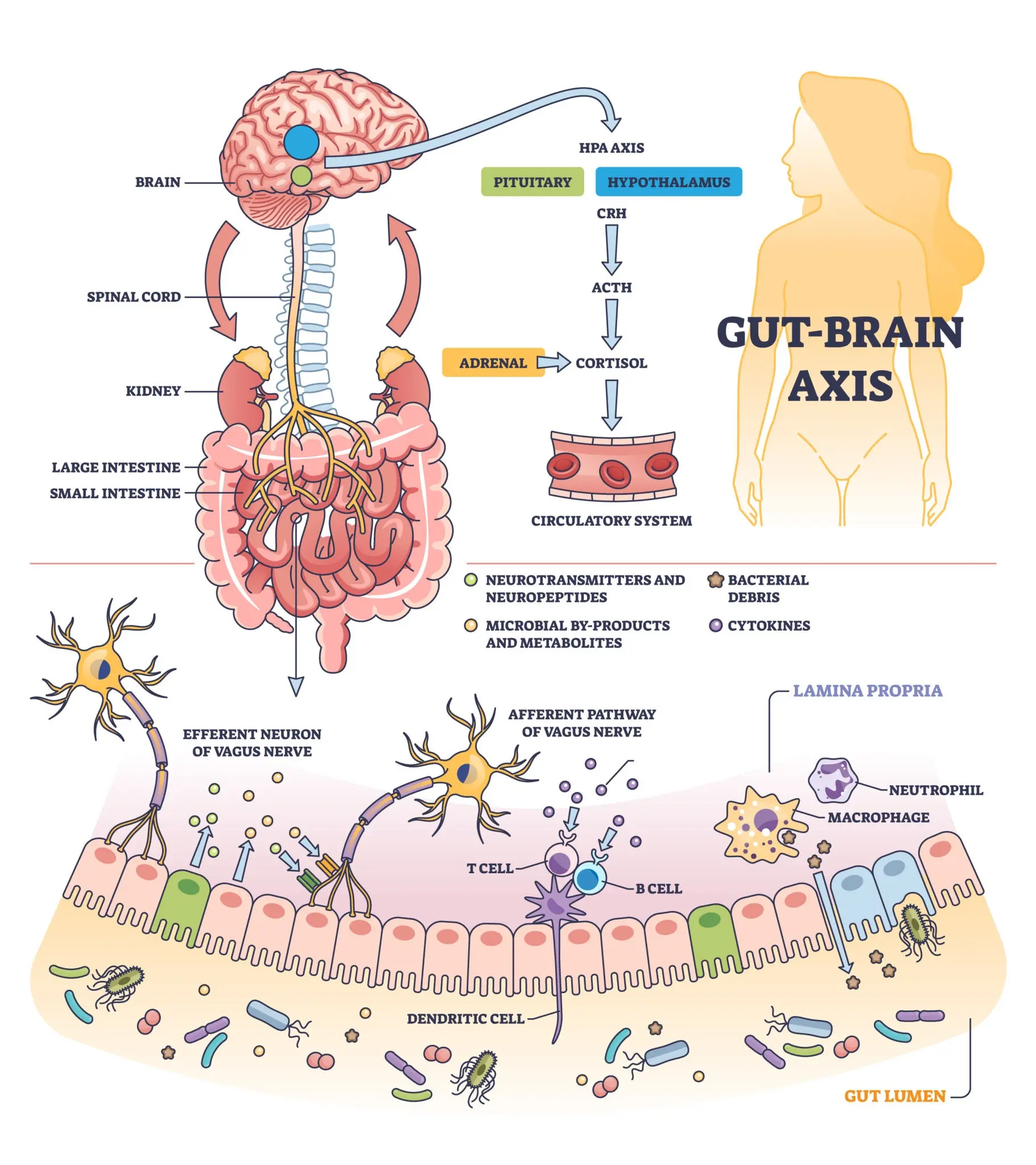
- Poor Gut Health (The Gut-Brain Axis): This is perhaps the most exciting area of research. Your gut and brain are in constant communication via the “gut-brain axis.” An imbalanced gut (from processed foods, sugar, or a lack of fiber) can send inflammatory signals straight up to the brain. Healing your gut is often a primary step in healing your mind.
- The Modern Diet: Diets high in refined carbs, sugar, and trans fats are gasoline on an inflammatory fire. They directly increase those harmful cytokines.
- Lack of Sleep: This is non-negotiable. Your brain runs a “rinse cycle” during deep sleep, clearing out toxins and inflammatory molecules. When you skip sleep, that inflammation builds up.
Other triggers can include environmental toxins (like pollution or mold) and even certain chronic infections, all of which keep your brain’s “security guards” on high alert.
Calming the Fire: A Holistic Approach to Easing Anxiety
When I work with clients like Sarah, we don’t abandon therapy. We add these biological strategies to it. It’s a holistic approach that honors the whole person—mind and body.
1. Eat an Anti-Inflammatory Diet
This isn’t about restriction; it’s about adding in “firefighting” foods.
- Omega-3s: Think of these as a fire extinguisher. Find them in fatty fish (like salmon), walnuts, and flax seeds.
- Color: Eat a rainbow of fruits and leafy greens. These are packed with antioxidants that calm inflammation.
2. Prioritize Your Gut Health
You can do this by adding:
- Probiotics: Fermented foods like yogurt, kefir, or kimchi.
- Prebiotics: These are the food for your good gut bacteria. Think garlic, onions, and asparagus.
3. Reclaim Your Rest (7-9 Hours)
Make sleep a sacred ritual. Your brain needs this time to repair and reset. If you struggle with sleep, this is a critical area to address.
4. Move Your Body (Gently)
Notice I said “moderately.” Overtraining can actually increase inflammation. But regular, moderate movement—like a brisk walk, yoga, or swimming—releases anti-inflammatory compounds in the brain.
5. Manage Stress at the Source
This is where therapy shines. Techniques like meditation, yoga, and deep breathing exercises are not just “relaxing”—they are clinically shown to reduce inflammatory stress hormones.
A New Way to Think About Your Anxiety
If you, like Sarah, have been doing “all the right things” and still feel stuck, I want to offer you a new lens—and new hope.
Your anxiety is real. It’s not a weakness, and it’s not “all in your head.” It may be a signal from your body that your brain is under physiological stress. By addressing the “hidden fire” of inflammation, you aren’t just masking symptoms. You are targeting a potential root cause.
This approach empowers you. It gives you tangible, daily actions that can support your brain, calm your nervous system, and, when combined with therapeutic work, help you find a lasting sense of peace—from the inside out.
Reflection for You: Think about the “silent triggers” listed above. Does one or two of them resonate with you? What is one small change you could make this week to help “cool the fire”?
Help Us Improve This Article
Have you discovered an inaccuracy? We put out great effort to give accurate and scientifically trustworthy information to our readers. Please notify us if you discover any typographical or grammatical errors.
Make a comment. We acknowledge and appreciate your efforts.
Share With Us
If you have any scale or any material related to psychology kindly share it with us at [email protected]. We help others on behalf of you.


